

Halifax Guide
Discover What Makes It Special
Welcome to Halifax
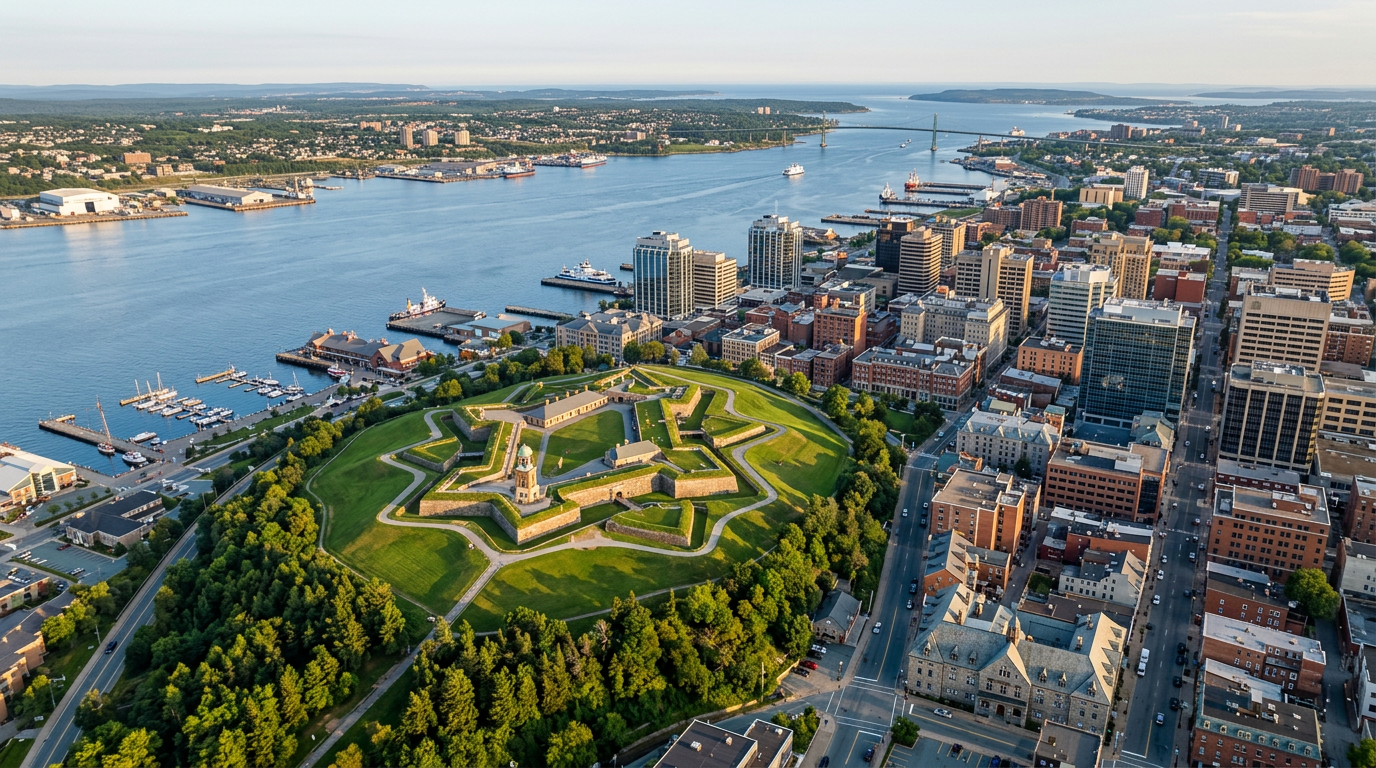
Halifax sits on Nova Scotia's Atlantic coast, wrapped around one of the world's great natural harbors. The city serves as the provincial capital and the main urban center of Canada's Maritime region, and its identity is tied closely to the water, with a working waterfront, a boardwalk, and a long maritime history that still shapes daily life.
Housing here changes noticeably from one area to the next. The older parts of the peninsula feature historic row houses, brick buildings, and character homes on tree-lined streets, while the South End mixes established residential blocks with a walkable, village-like feel. Beyond the peninsula, you'll find mid-century suburbs, newer subdivisions, and coastal communities with a quieter pace.
Residents enjoy a strong café and restaurant scene, local seafood, independent shops, live music, and a well-loved public park system, including a large urban green space near the downtown. Transit and walkability are strongest on the peninsula, and the economy draws on government, health care, education, ocean industries, and the port. Halifax suits young professionals, students, families, and retirees who want a coastal city with real variety in its neighborhoods.
Halifax Score

0Walk Score

0Bike Score

0Transit Score
Halifax FAQ
Q: Bedford Mill Cove development plan
As a Halifax-area real estate agent, I’m watching Mill Cove closely because new public discussions are emerging around development ideas, a potential new ferry, a library, and additional public places. For buyers comparing Bedford with Halifax or Dartmouth, the key question is how these plans may shape access, amenities, and housing demand over time. Details are still being discussed, so I recommend reviewing public engagement materials and evaluating each property for transit access, flood-risk considerations, and its current—not speculative—value.
Q: New developments around Prospect and Terence Bay
As a Halifax-area agent who works the west-end communities each week, the key proposal I’m tracking near Prospect and Terence Bay is a residential Low-Density Classic Conservation Design Development with up to 189 units. The plan places homes along new public streets and shared private driveways connected to Prospect Road and Bayside Drive. Buyers and neighbours should follow the planning process closely, particularly changes to layout, servicing, access, environmental considerations, and the balance between new housing and conservation.
Q: How does buying in Halifax compare with Dartmouth for access, housing types, and harbour-crossing commutes?
Working with buyers across Halifax and Dartmouth each week, I find Halifax offers stronger peninsula access to Dalhousie, Spring Garden, Point Pleasant Park, downtown high-rises, Victorian houses, and multi-unit infill. Dartmouth is often less expensive and offers growing infrastructure, access to major highways, and nearby businesses in Burnside Industrial Park. For anyone working on the Dartmouth side, choosing Dartmouth can avoid a morning harbour crossing. Although the bridges are normally free, weekend Macdonald Bridge repair closures can create long lines on the MacKay Bridge.
Q: Could Halifax homeowners qualify for the 2025 Second Unit Incentive Program when creating an additional unit?
Yes, Halifax homeowners may be able to qualify when creating an additional unit, because the 2025 Second Unit Incentive Program was established under Housing Accelerator funding. In my Halifax practice, I would treat this as a potential incentive rather than assume approval: eligibility, eligible costs, unit standards, and application timing should be confirmed with the current municipal program requirements before work begins. This is especially relevant as 2024 rules made multiple dwelling units possible on nearly all residential lots, subject to applicable approvals.
Q: Can I add multiple dwelling units to a Halifax residential lot under the current rules?
Yes, in many cases. Since 2024, Halifax rules allow multiple dwelling units on nearly all residential lots, but the actual option depends on the lot’s zoning, area, road frontage, and whether the proposed building meets applicable requirements. I work with Halifax properties, and these details can change the best approval route. Before planning a conversion, addition, or infill project, contact 311 with the property details and confirm which process applies.
Q: Which Halifax neighbourhoods could benefit from proposed rapid transit routes, and how should I evaluate that uncertainty?
Working in Halifax each week, I would treat transit upside as a possibility—not a promise. The 2020 Rapid Transit Strategy proposed four fixed-route BRT lines, but that proposal alone does not confirm which neighbourhoods will be served. Areas such as Prospect and Terence Bay are currently under review by a city councillor for alternative public transportation solutions, so their outlook is especially uncertain. When comparing homes, separate approved projects from proposals, verify the latest municipal updates, and value today’s access independently of any future route.
Q: How might the proposed Halifax Exhibition Centre development affect nearby housing choices and neighbourhood change?
From my perspective as a Halifax-area agent working these communities each week, the proposed Halifax Exhibition Centre development—approximately 5,867 residential units—could significantly broaden housing choices, particularly for buyers and renters seeking newer, higher-density options. That scale may also reshape demand in established neighbourhoods as people compare apartments with detached homes and secondary suites. Given the area’s proximity to the waterfront and Bayers Lake Plaza, I expect increased real estate interest extending toward Terence Bay, Hatchet Lake, Brookside and Prospect, with local infrastructure and community character key to watch.